
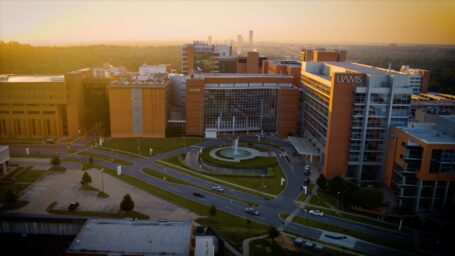
For a Better State of Health.
Start living your happiest, healthiest life with a visit to UAMS Health. With clinics covering nearly every medical need, we provide world-class treatment in a comforting, patient- and family-centered environment.
Official Orthopaedics Partner of the Razorbacks
The sports medicine specialists at UAMS Health and the University of Arkansas have come together to provide Razorback student-athletes with the best care in the state.
Learn MoreInnovative Expert Care for You
UAMS Health is home to world-renowned providers offering the latest treatments and procedures in these areas:
- Women's Health
- Cancer
- Orthopaedics
- Stroke Care
- Trauma
- and more
Caring for You
From the latest in cancer treatments to the newest brain surgery techniques, our staff includes highly-specialized clinicians and caregivers with national and international reputations for excellence. And if you just need a simple checkup, we have you covered there, too.
Learn MoreIncredible Doctors
Our find-a-doctor tool helps you choose from our diverse pool of health care providers. If you aren’t sure what you’re looking for, you can explore based on conditions, treatments, and types of care. You can also use real patient ratings and reviews to help you make your choice.
Search for a DoctorHealth Care Where You Need It the Most
UAMS Health has many convenient locations for your family including UAMS Medical Center in Little Rock, neighborhood clinics, and Family Medical Centers throughout the state. View locations, get directions, phone numbers, and more.
Search for a LocationPatient Stories: Fort Smith Retiree Heading to Disney World after Successful Proton Therapy for Brain Tumors
In November 2023, Malinda Larey, 67, of Fort Smith, Arkansas, was all set to jump on the retirement travel bandwagon when she was unexpectedly diagnosed with atypical meningioma. Meningiomas are tumors that grow from the membranes surrounding the brain and spinal cord. Patients can have a range of symptoms — from none to severe seizures,…
UAMS Health News
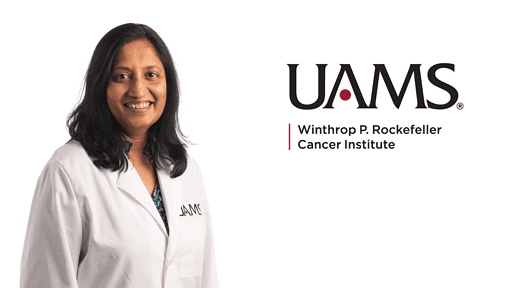
Anuradha Kunthur, M.D., Joins UAMS Winthrop P. Rockefeller Cancer Institute
Anuradha Kunthur, M.D., has joined the Division of Hematology Oncology at the University of Arkansas for Medical Sciences (UAMS) Winthrop P. Rockefeller Cancer Institute, where she treats patients with blood cancers and other hematological disorders. “We are thrilled that Dr. Kunther decided to join us after completing her fellowship at UAMS, said Ahmed Abuabdou, M.D.,…
Read more
UAMS Arkansas Geriatric Education Collaborative Partners in Disaster Preparedness Event for Older Adults
LITTLE ROCK — The University of Arkansas for Medical Sciences (UAMS) Arkansas Geriatric Education Collaborative (AGEC) is collaborating with UAMS Health ARConnectNow, the American Red Cross, Pulaski Heights United Methodist Church, The Alzheimer’s Association, Metropolitan Emergency Medical Services (MEMS) and Edward Jones to present a community event on “Disaster Preparedness for Older Adults.”
Read more
Mind over Menopause — Managing mental health during a time of change
By Philmar Mendoza Kabua, BSN May is Women’s Health Month and Mental Health Month, making it a great time to discuss an often overlooked but important topic: menopause. Menopause is a natural part of life, but it can cause significant changes in the body that can really affect a woman’s mental health. It’s important to…
Read more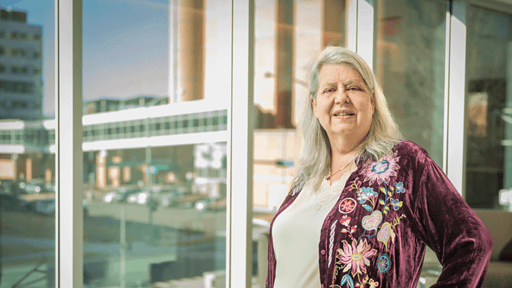
Fort Smith Retiree Heading to Disney World after Successful Proton Therapy for Brain Tumors
In November 2023, Malinda Larey, 67, of Fort Smith, Arkansas, was all set to jump on the retirement travel bandwagon when she was unexpectedly diagnosed with atypical meningioma. Meningiomas are tumors that grow from the membranes surrounding the brain and spinal cord. Patients can have a range of symptoms — from none to severe seizures,…
Read more