

For a Better State of Health.
Start living your happiest, healthiest life with a visit to UAMS Health. With clinics covering nearly every medical need, we provide world-class treatment in a comforting, patient- and family-centered environment.
Official Orthopaedics Partner of the Razorbacks
The sports medicine specialists at UAMS Health and the University of Arkansas have come together to provide Razorback student-athletes with the best care in the state.
Learn MoreInnovative Expert Care for You
UAMS Health is home to world-renowned providers offering the latest treatments and procedures in these areas:
- Women's Health
- Cancer
- Orthopaedics
- Stroke Care
- Trauma
- and more
Caring for You
From the latest in cancer treatments to the newest brain surgery techniques, our staff includes highly-specialized clinicians and caregivers with national and international reputations for excellence. And if you just need a simple checkup, we have you covered there, too.
Learn MoreIncredible Doctors
Our find-a-doctor tool helps you choose from our diverse pool of health care providers. If you aren’t sure what you’re looking for, you can explore based on conditions, treatments, and types of care. You can also use real patient ratings and reviews to help you make your choice.
Search for a DoctorHealth Care Where You Need It the Most
UAMS Health has many convenient locations for your family including UAMS Medical Center in Little Rock, neighborhood clinics, and Family Medical Centers throughout the state. View locations, get directions, phone numbers, and more.
Search for a LocationPatient Stories: UAMS Myeloma Patient Grateful for ‘Life Changing’ Treatment
Jim Schepers remembers getting a call he didn’t want in April 2020. The call was from Frits van Rhee, M.D., Ph.D., clinical director of the Myeloma Center at the University of Arkansas for Medical Sciences (UAMS) and Schepers’ physician — cancer had returned. “When we found out the cancer was back, Dr. van Rhee called…
UAMS Health News

UAMS Hosts POWER Workshop for Perinatal Health on April 24
LITTLE ROCK — The University of Arkansas for Medical Sciences (UAMS) and the Arkansas Perinatal Quality Collaborative (ARPQC) will hold an all-day perinatal quality improvement workshop April 24 in Little Rock. This workshop is organized in partnership with the Perinatal Outcomes Workgroup Through Education and Research (POWER), a part of the High-Risk Pregnancy Program at…
Read more
UAMS Hosts Free Parkinson’s Symposium April 21
LITTLE ROCK — A free, public forum on Parkinson’s disease and Parkinson’s plus syndromes will be held April 21 at the University of Arkansas for Medical Sciences (UAMS). The ninth annual Parkinson’s Symposium will take place from 1 p.m. to 3 p.m. in the Fred Smith auditorium on the 12th floor of the Jackson T….
Read more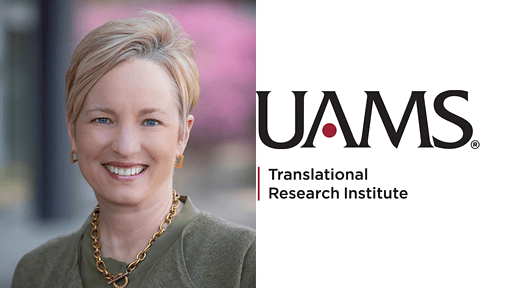
National Journal Devotes Issue to Project Led by TRI’s Laura James, M.D.
UAMS Translational Research Institute (TRI) Director Laura James, M.D., concluded her tenure as co-chair of the national Clinical and Translational Sciences Award (CTSA) Steering Committee in December with an effort aimed at making clinical trials more informative and of higher quality. Her work, and those of other CTSA leaders, appears in a themed issue of…
Read more
UAMS Celebrates First Graduates of Community Health Worker Training Program
FAYETTEVILLE — The UAMS Institute for Community Health Innovation will graduate seven community health workers (CHW) this month, celebrating the first class to complete the one-year Community Health Worker Training and Apprenticeship Program. The institute, formerly the UAMS Office of Community Health & Research, has enrolled 88 CHWs from 21 counties across Arkansas since starting…
Read more